
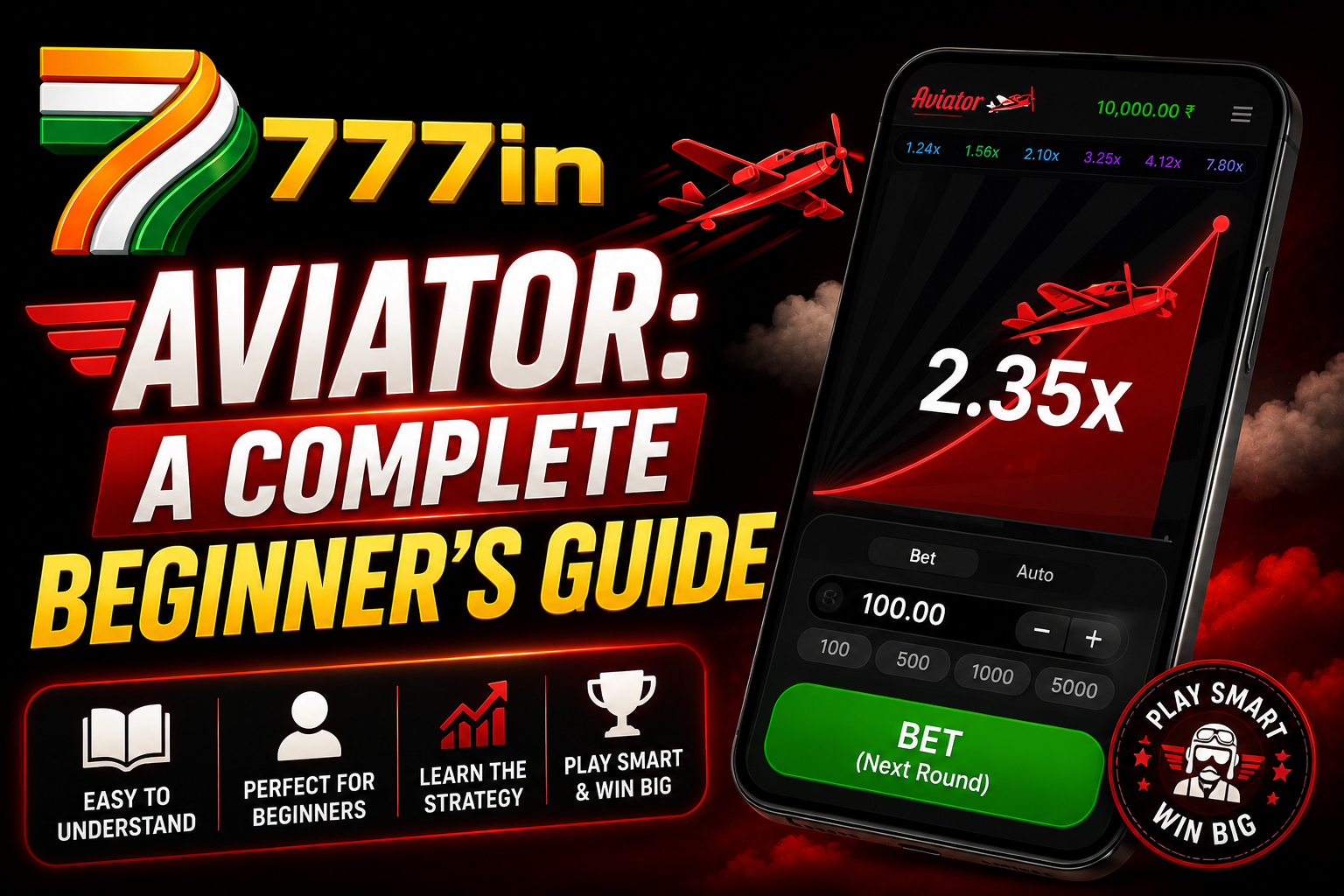
Aviator is one of the most-played games in India, and it's easy to see why: a single round lasts seconds, the rules fit on a postcard, and the tension of deciding when to cash out is genuinely thrilling. That same simplicity hides a few habits worth building early. This guide walks through how a round works, the two-bet system, and a calm approach to cashing out.
How a round of Aviator works
Every round begins with a short betting window. You set a stake, the plane takes off, and a multiplier climbs from 1.00× upward. The longer the plane stays in the air, the higher the multiplier — and your potential payout. At a random moment the plane flies away; if you've cashed out before that happens, you keep your stake multiplied by the value at the moment you tapped. If you don't, the round is lost.
Because the fly-away point is random and decided by a provably-fair system, there's no pattern to predict. What you can control is your stake and your exit.
Use the two-bet system
Aviator lets you place two separate bets in a single round, each with its own cash-out. Many players use this to balance risk: cash one bet out early at a modest multiplier to lock in a small, steady return, and let the second ride a little longer for a bigger payout. It's a simple way to stay in the game without betting everything on one brave hold.
Cashing out with a clear head
The hardest part of Aviator isn't placing the bet — it's resisting the urge to wait for 'just a bit more'. Setting an auto-cash-out at a fixed multiplier removes that emotion entirely. A target around 1.5×–2× hits often; chasing 10×+ feels exciting but lands rarely. Decide your plan before the round, not during it.
Aviator rewards discipline far more than nerve. Pick a sensible cash-out target, use the two-bet split to manage risk, and treat the big multipliers as a bonus rather than a plan.
Frequently asked questions
Ready to put this into practice?